
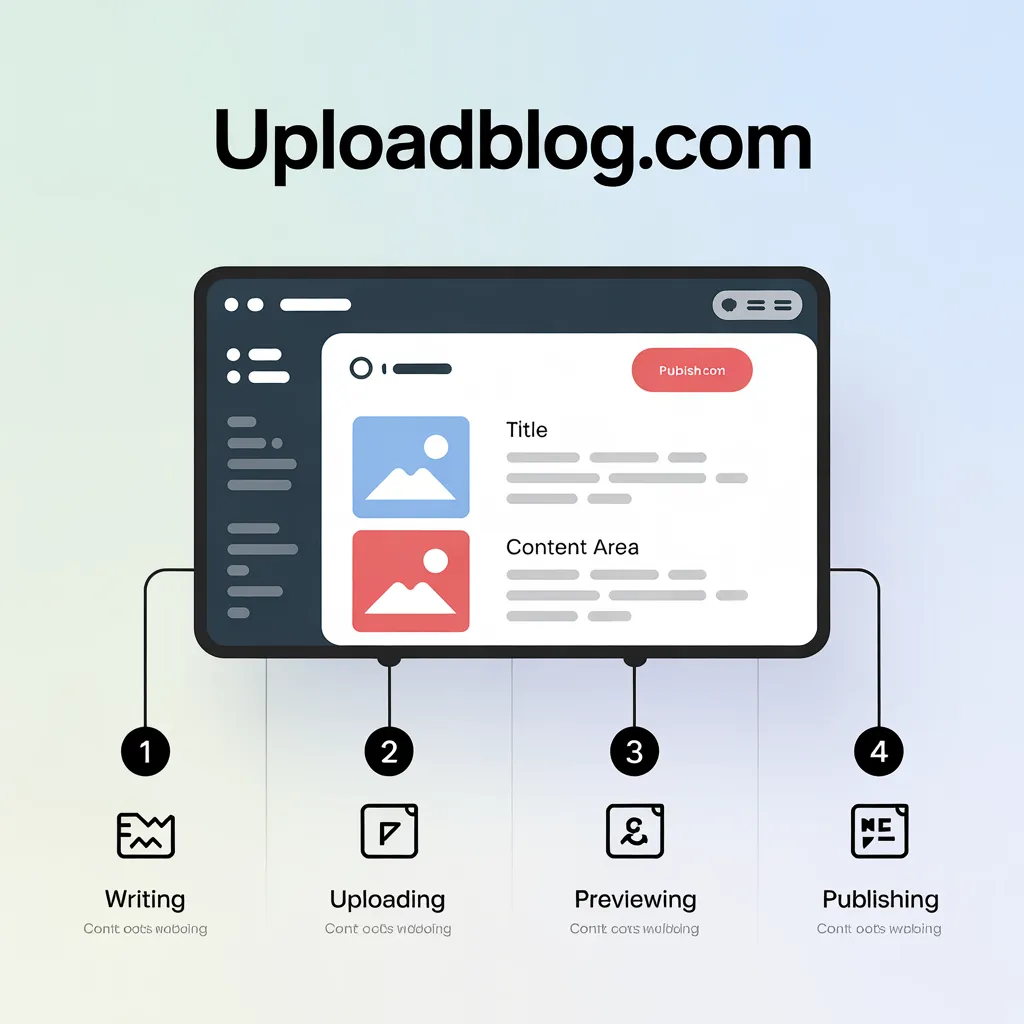
Let’s be honest for a second. You have poured your heart into writing a fantastic blog post. The words flow, the ideas are sharp, and you are excited to share it with the world. Then comes the moment of dread: actually getting it online. For many of us, the technical side of publishing feels like a completely different language. It is frustrating, intimidating, and it can make you want to give up before you even start.
If you are searching for how to upload blog on website by UploadBlog. com, you are likely looking for a way to skip all that technical confusion. You want a simple, reliable path to get your words from your computer screen to the eyes of your readers without needing a degree in web development. I have been there myself—staring at a complex dashboard, feeling completely lost. But it does not have to be that way. In this guide, we are going to walk through the process together, step by step, in a natural and easy-to-follow way. We will cover everything from setting up your account to hitting that publish button with confidence, ensuring your voice is heard without any unnecessary hassle.
What Does It Actually Mean to Upload a Blog?
Before we dive into the specific steps, let us take a moment to demystify what is actually happening when you upload a blog. In simple terms, you are taking a file or a piece of text from your private computer and making it publicly available on the internet. Traditionally, this would involve buying a domain name, setting up a hosting server, and installing complex software. It is a lot.
However, platforms like UploadBlog. com are designed to remove all of that friction. Think of it as a ready-to-use publishing space. You do not need to build the house; you just need to move in your furniture—your content. The platform handles the hosting, the layout, and the technical background noise, so you can focus entirely on what you do best: writing and connecting with your audience . This is why so many beginners, freelancers, and busy professionals turn to services like this. It is about speed, simplicity, and getting back to the joy of sharing ideas.
Why UploadBlog.com Is a Smart Choice for Writers
So, why should you consider using UploadBlog. com? The popularity of simple publishing platforms has skyrocketed, and for good reason. The main appeal is that it lowers the barrier to entry. You do not need to learn HTML, CSS, or how to configure a server. Everything is designed to work straight out of the box .
Another reason I appreciate platforms like this is the speed. When inspiration strikes or you are racing against a deadline, the last thing you want is to troubleshoot a plugin error. With UploadBlog. com, the goal is to get you from a blank page to a published post within minutes. It respects your time and your creative energy, allowing you to refine your message rather than wrestling with technology. It also builds a sense of momentum. When publishing is easy, you are far more likely to do it consistently, and consistency is the real secret to building an audience.
Getting Started: Creating Your UploadBlog.com Account
Now, let us get into the practical steps of how to upload blog on website by UploadBlog. com. The very first thing you need to do is set up your account. This is usually a very straightforward process. You will head to the website and look for a “Sign Up” or “Create Account” button. You will likely need to provide a few basic details like your name, a valid email address, and a password you can remember.
Once you are registered, take a moment to complete your profile. I know this step can feel like a formality, but it actually matters a lot. Adding a short bio and a profile picture builds trust with your future readers. It tells them, “Hey, a real person wrote this, and here is why you should listen to them.” Over time, having a consistent and professional-looking profile helps your content feel more credible and recognizable.
Navigating to the Blog Editor
After logging in, you will be taken to your dashboard. This is your central command center. Look for a button or link that says something like “New Post,” “Create,” or “Write.” Clicking this will open the blog editor.
This editor is where the magic happens. It is usually designed to look like a simplified word processor. You will see a field for your title at the top and a large blank space for your content below. There will be a toolbar with basic formatting options like bold, italics, and bullet points. Before you start pasting or typing, I recommend finding the “Save Draft” button. Click it right away. This ensures your work is safe on the platform even if your internet connection hiccups or your browser decides to act up.
Formatting Your Content for the Web
Now comes the fun part: adding your content. You can either write directly in the editor or paste your text from a document. If you are pasting from a program like Microsoft Word or Google Docs, I suggest pasting it without formatting. There is usually an option called “Paste as plain text” or you can use a keyboard shortcut.
Good formatting is what separates a wall of text from an enjoyable reading experience. People do not read on screens the same way they read a book. They scan. They look for headings to guide them. To make your blog easy to digest, break your content into short paragraphs. A paragraph should ideally be no more than four or five sentences. Use headings (like the H2s and H3s in this article) to structure your points. This keeps your readers engaged and prevents them from clicking away because the page feels overwhelming
Adding Categories and Tags
After your content looks clean and well-structured, scroll down to find the settings for categories and tags. This is an important step that many new writers overlook. Categories are like the main chapters of your blog. They help organize your content into broad topics. Tags are more specific keywords that describe the finer details of your post.
Choosing the right category ensures your blog lands in the right section of the platform. If UploadBlog. com has a front page or topic sections, this is how you get discovered by readers who care about your subject. Think about what your reader might be searching for and use categories to guide them directly to your work .
The Publishing Moment
You have written, formatted, and categorized. Everything looks perfect. It is time to hit publish. This is the moment you have been working toward.
Depending on the specific rules of UploadBlog. com, your post might go live instantly, or it might go into a review queue. If there is a review process, do not let that discourage you. It is usually in place to maintain quality across the platform and prevent spam. Think of it as a quality checkpoint rather than a barrier. Once your blog is published, you will receive a unique public link. This link is gold. You can now share your article on social media, include it in your email newsletter, or add it to your professional portfolio .

Connecting UploadBlog.com to Your Own Website
This is a scenario I encounter a lot. Maybe you already have a personal website, but you want to use UploadBlog. com to reach a wider audience. How do you handle that? It is important to be strategic.
If you plan to publish the same content on both your own site and UploadBlog. com, you need to be careful. Search engines can penalize duplicate content. Posting identical articles in multiple places can confuse Google and make it harder for readers to find you. A better approach is to treat your personal website as your primary home base. You can publish a summarized version, a teaser, or a slightly rewritten excerpt on UploadBlog. com. Then, within that post, you can include a link that guides readers back to your main website for the full article. This strategy helps you grow your own platform while still benefiting from the exposure of a larger publishing network .
Common Pitfalls to Avoid
Even when the platform is simple, there are a few common mistakes that can trip you up. Being aware of them can save you a lot of frustration.
-
Skipping the proofread: I know you are excited to publish, but clicking “publish” without a final read-through is a risk. A quick scan can catch typos or formatting errors that could hurt your credibility.
-
Ignoring mobile view: Many people read blogs on their phones. Always check how your post looks on a small screen. If the paragraphs are too long, break them up.
-
Inconsistent posting: One of the biggest mistakes is publishing one great post and then disappearing for months. Platforms and readers favor consistency. It is better to post once a week consistently than to post ten times in one day and nothing for the rest of the year .
The Bigger Picture: Why Your Voice Matters
We have talked a lot about the “how,” but I want to end this section by touching on the “why.” In a world flooded with short videos and rapid-fire social media posts, long-form blogging remains one of the most powerful tools for establishing authority and building genuine connection. When you take the time to write a thoughtful, helpful article, you are showing your audience that you care about providing value.
Learning how to upload blog on website by UploadBlog. com is not just about one post. It is about building a habit. Once you remove the technical friction, publishing becomes a natural extension of your creative process. You stop seeing it as a chore and start seeing it as the exciting final step where your ideas finally get to meet the world.
Conclusion
Uploading a blog does not have to be a stressful ordeal. By using a platform like UploadBlog. com, you are essentially giving yourself permission to focus on what matters: your message. We have covered how to set up your account, use the editor, format your content for readability, and publish with confidence. The technical side is now handled, so you can pour that energy back into your writing.
The real value here lies in consistency and care. Each blog you upload is a building block for your online presence. When you treat publishing as a simple and rewarding habit, your journey becomes smoother and far more sustainable. So, what topic are you going to upload first? I would love to hear about your first publishing experience in the comments below.
Frequently Asked Questions
1. Is UploadBlog.com really free to use?
While many similar platforms offer free tiers, it is best to check their current pricing page. Typically, basic publishing features are accessible without a fee, but premium features like custom domains or advanced analytics may require a subscription.
2. Do I need to know coding to upload a blog?
No, not at all. The entire purpose of platforms like UploadBlog. com is to eliminate the need for coding. You use a simple, visual editor similar to a word processor.
3. Can I edit my blog after it is published?
Yes, most platforms allow you to go back and edit your post. You can usually log in, find your published post in your dashboard, and click “Edit” to make changes.
4. How do I add images to my blog?
Within the editor, there is usually an “Add Media” or image icon. Clicking it allows you to upload images directly from your computer. Make sure to use descriptive file names for your images to help with search visibility.
5. What is the best way to get readers?
Publishing is only the first step. Share your post link on your social media profiles, engage with other writers in your niche, and be consistent. The more quality content you publish, the more opportunities readers have to find you.
6. Can I use my own domain name with UploadBlog.com?
Some platforms offer the option to connect a custom domain. You would need to check the specific settings or upgrade options within UploadBlog. com to see if this feature is available.
7. What happens if my post gets stuck in review?
If a platform has a review process, it usually means a human is checking for spam or guideline violations. It can take a few hours. If it takes longer than a day, you can usually reach out to support for an update.
8. How long should my blog posts be?
There is no perfect length, but aiming for 1,000 words or more gives you enough space to cover a topic in depth. The most important thing is to fully answer the question or address the topic you promised in your title.








Leave a Reply